
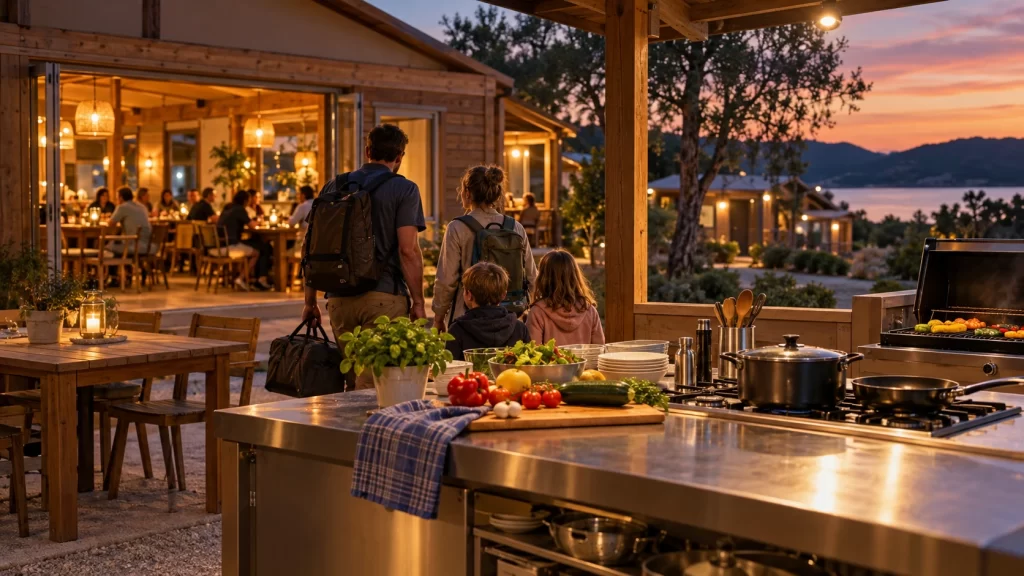
A late arrival at a campsite can make dinner the first practical question of the stay. Should you look for restaurant dining, plan to use cooking facilities, or eat before you arrive? The best choice depends on your arrival time, the season, who is travelling with you, and what the campsite has confirmed will be available that evening.
Guests have both a restaurant and a guest kitchen to consider. The guest kitchen is open for use every day during the school summer holiday, and the campsite also describes opportunities to grill outdoors. Those details are useful for planning, but they do not establish restaurant opening hours or guarantee access to a meal after a late arrival. Checking the timing before you travel can save a tired group from having to improvise at the end of the day.
Start with your actual arrival time
“Late” means different things to different travellers. A family reaching its cabin in the early evening may still have time to settle in and eat. Someone arriving after a long drive may find that unpacking, organising beds and feeding children takes longer than expected. Consider when you will realistically be ready for dinner, not just when you expect to reach the campsite entrance.
Build in a little room for traffic, stops and the time it takes to get everyone out of the vehicle. If your plan depends on a restaurant meal, confirm the restaurant’s current serving hours and whether its full menu is available near closing time. If you expect to cook, confirm that the guest kitchen will be accessible when you need it.
Arrival arrangements matter too. If you expect to arrive outside reception hours, check how you will access your accommodation or pitch and where to find the facilities. Knowing that a kitchen exists is less helpful if you do not yet know how to get to it after checking in.
When restaurant dining makes sense
A restaurant is often the simplest choice when the journey has already used up everyone’s energy. It avoids unpacking ingredients, finding equipment and washing up before bedtime. Guests can eat in the restaurant or take food back to their cabin or caravan, which offers some flexibility if the group would rather settle in first.
That convenience still depends on timing. A restaurant on the campsite does not necessarily serve food throughout the evening, and an open dining room does not tell you when the kitchen stops taking orders. Ask about the hours that apply to your travel date, particularly if you are arriving near the end of the day. If takeaway is part of your plan, check whether it will be available at your expected arrival time.
When the guest kitchen is the better fit
Cooking facilities give you more control over the meal. They can be particularly useful if someone in the group has specific food preferences, you have ingredients that need using, or you want a familiar meal after travelling. Its guest kitchen is open every day during the school summer holiday. If your stay falls outside that period, check access before making it central to your plans.
Think through the meal itself as well as the facility. A simple dish using a few ingredients is easier on an arrival night than a recipe that needs extensive preparation. Bring the food you need or establish when you can shop; a late arrival may leave little time to buy missing items. Check what cooking equipment and utensils are available before deciding what to pack, since the presence of a guest kitchen alone does not specify its contents.
Shared facilities also work best when you allow for other guests. You might need to wait for space, and you should leave enough time to clean up afterwards. If everyone is hungry on arrival, a quick meal you can assemble with minimal cooking may be more practical than one that occupies the kitchen for a long time.
Where grilling fits into the plan
Outdoor grilling can make dinner feel like part of the camping experience, and the campsite notes that guests have opportunities to grill. It is less dependable as an unconfirmed late arrival plan. You need to know where grilling is permitted, what equipment and supplies you will need, and whether the conditions on the evening make cooking outdoors comfortable.
Consider a couple arriving during the school summer holiday with ingredients for a grilled meal. If they reach the campsite much later than expected, preparing food outdoors may no longer appeal. A meal that can also be made in the guest kitchen gives them a useful alternative, provided they have confirmed kitchen access for that evening.
For more detailed information on this topic, read our guide on Select Common Electric Vehicle Charging Mistakes at Campsites.
Pack a modest backup meal
Even a well-planned journey can run late. A small supply of food that needs little preparation can cover the gap between arrival and the next morning without requiring you to carry an entire second dinner. Choose items that suit your accommodation, your group’s dietary needs and the storage conditions available during travel.
This backup is especially helpful if you are relying on a restaurant close to the end of its serving hours or travelling outside the guest kitchen’s stated summer season. It also lets you make a calm decision on arrival: eat what you brought, cook if the facilities are accessible, or enjoy a restaurant meal if there is time.
The most reliable dinner plan is based on the hours and access that apply to your specific stay. Confirm those details, keep the arrival meal simple, and allow for a delay. Then restaurant dining and cooking facilities become useful choices rather than last-minute guesses.