
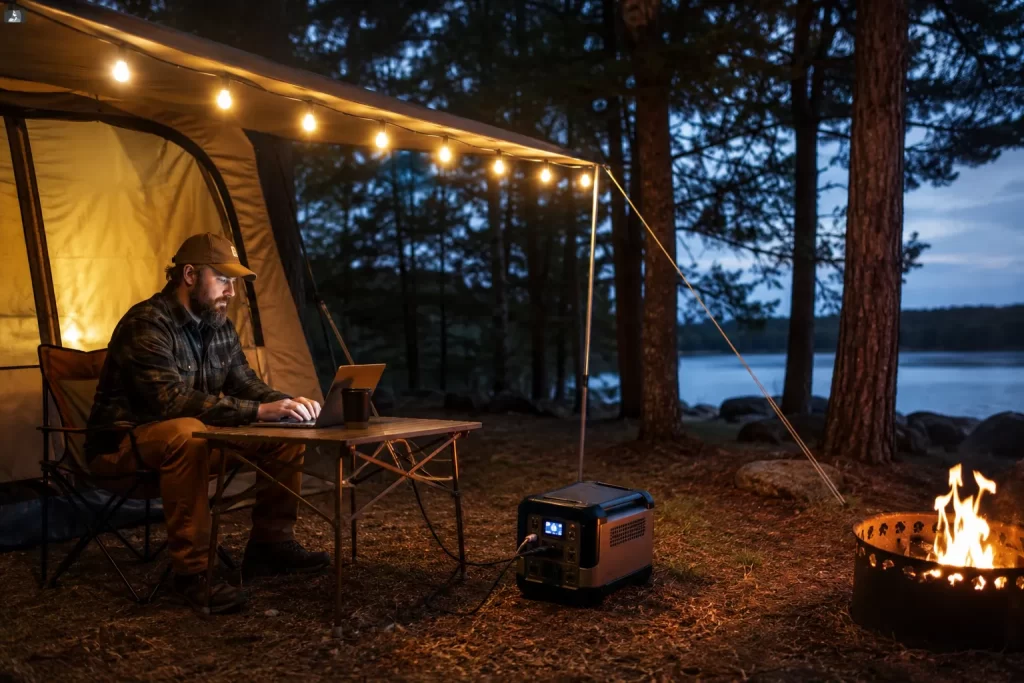
Camping with Electricity has become increasingly popular as more campers seek comfort without giving up outdoor experiences. Modern campgrounds across the United States now offer electrical hookups for tents, RVs, and trailers. According to the North American Camping Report, over 58 million households camp annually, and demand for powered campsites continues to rise.
Camping with Electricity allows us to power lights, refrigerators, cooking appliances, and electronic devices. Many campgrounds provide 15-amp, 30-amp, or 50-amp connections. A standard 30-amp hookup delivers 3,600 watts of power, while a 50-amp hookup can provide up to 12,000 watts.
Understanding how electrical camping works helps us stay safe and enjoy greater convenience. Whether we use an RV, camper van, or tent with portable power stations, knowing the available options prevents costly mistakes. Proper preparation also reduces fire hazards and protects expensive equipment. By learning the basics, we can enjoy nature while maintaining modern comforts.
Understanding Camping with Electricity
Common Electrical Hookups at Campgrounds
Most campgrounds offer dedicated electrical pedestals. These stations supply power for recreational vehicles and some tent sites. The three common connections are 15-amp, 30-amp, and 50-amp outlets.
A 15-amp outlet operates similarly to household power and delivers approximately 1,800 watts. A 30-amp connection uses 120 volts and provides 3,600 watts. A 50-amp hookup uses 240 volts and supplies up to 12,000 watts. National parks, private resorts, and KOA campgrounds frequently provide these options.
Campers should always confirm power availability before booking. Some remote campgrounds offer no electricity at all. Extension cords, surge protectors, and adapters are often necessary depending on the campsite setup. Understanding these electrical ratings helps prevent overloaded circuits and equipment damage.
Typical Devices Used During Powered Camping
Camping with Electricity allows us to operate many everyday appliances. Modern campers often bring energy-efficient equipment to reduce consumption and improve reliability.
Common devices include:
- LED lights consume 10 watts.
- Portable refrigerators require 50 to 80 watts.
- Coffee makers use 800 to 1,200 watts.
- Electric grills consume 1,500 watts.
- Laptop chargers are drawing 60 watts.
- Smartphone chargers require 20 watts.
Portable power stations have also become popular. Units with 1,000Wh capacities can charge smartphones more than 70 times. Solar generators provide additional backup power and help campers reduce dependence on campground hookups.
Safety Tips for Camping with Electricity
Preventing Electrical Hazards
Electrical safety should remain a top priority during any camping trip. Wet conditions, damaged cables, and overloaded circuits can create serious risks.
Experts from the National Fire Protection Association recommend using outdoor-rated extension cords and weather-resistant connectors. Surge protectors help safeguard sensitive appliances from voltage fluctuations. Inspecting cords before every trip prevents exposure to damaged insulation.
Campers should never connect multiple high-wattage appliances simultaneously. A 30-amp hookup has a maximum capacity of 3,600 watts. Running an air conditioner, microwave, and electric heater together can exceed this limit. Proper load management extends equipment life and improves overall safety.
Essential Safety Equipment
Experienced campers often carry additional protective equipment. These items help prevent electrical failures and improve peace of mind.
Important equipment includes:
- Surge protectors.
- Ground fault circuit interrupter adapters.
- Heavy-duty outdoor extension cords.
- Waterproof cable covers.
- Digital voltage monitors.
- Portable carbon monoxide detectors.
Using certified products from recognized manufacturers increases reliability. Investing in quality equipment often prevents expensive repairs and unexpected power outages during trips. Start your journey with our guide to outdoor equipment.
Portable Power Options for Modern Campers
Power Stations and Solar Generators
Portable energy solutions have transformed Camping with Electricity. Lithium battery power stations offer quiet operation and eliminate fuel requirements.
A 500Wh power station typically powers LED lighting for over 40 hours. A 1,500Wh unit can operate portable refrigerators for approximately 24 hours. Solar panels ranging from 100 watts to 400 watts allow battery recharging during daylight hours.
According to outdoor equipment specialists, lithium iron phosphate batteries can exceed 3,500 charging cycles. This durability makes them suitable for frequent campers. Solar-powered systems also reduce noise compared with gasoline generators and create fewer environmental impacts.
Comparing Popular Electrical Options
| Power Source | Typical Output | Runtime Benefits | Noise Level |
|---|---|---|---|
| 15-Amp Hookup | 1,800 watts | Unlimited | Silent |
| 30-Amp Hookup | 3,600 watts | Unlimited | Silent |
| 50-Amp Hookup | 12,000 watts | Unlimited | Silent |
| Portable Power Station | 500W–2,000W | Battery dependent | Silent |
| Gas Generator | 2,000W–7,500W | Fuel dependent | Moderate |
| Solar Generator | 300W–2,000W | Renewable charging | Silent |
How to Plan an Efficient Electrical Setup
Calculating Your Power Needs
Successful Camping with Electricity begins with understanding daily energy consumption. Calculating wattage prevents overloading and improves efficiency.
For example, a 60-watt laptop used for four hours consumes 240Wh. A portable refrigerator using 70 watts continuously consumes approximately 1,680Wh daily. LED lighting typically requires less than 100Wh per day.
Creating an equipment list helps estimate total energy requirements. Energy-efficient appliances significantly reduce consumption and extend battery life. Many experienced campers recommend maintaining at least 20% reserve capacity for emergencies. Proper planning ensures dependable power throughout the trip.
Conclusion
Camping with Electricity offers comfort, convenience, and flexibility for modern outdoor enthusiasts. Powered campsites, portable batteries, and solar generators make camping more enjoyable without sacrificing essential amenities.
Understanding electrical capacities and practicing proper safety measures reduces risks and protects valuable equipment. By calculating energy requirements and choosing suitable power sources, we can enjoy reliable electricity while appreciating the outdoors. Careful preparation allows every camping trip to remain comfortable, efficient, and safe.